inquiry
Deixe um recado
Se você estiver interessado em nossos produtos e quiser saber mais detalhes, deixe uma mensagem aqui e responderemos o mais breve possível.
Enviar
Tecnologia de proteção de soldagem Bengbu Longkai Co., Ltd.
Lar

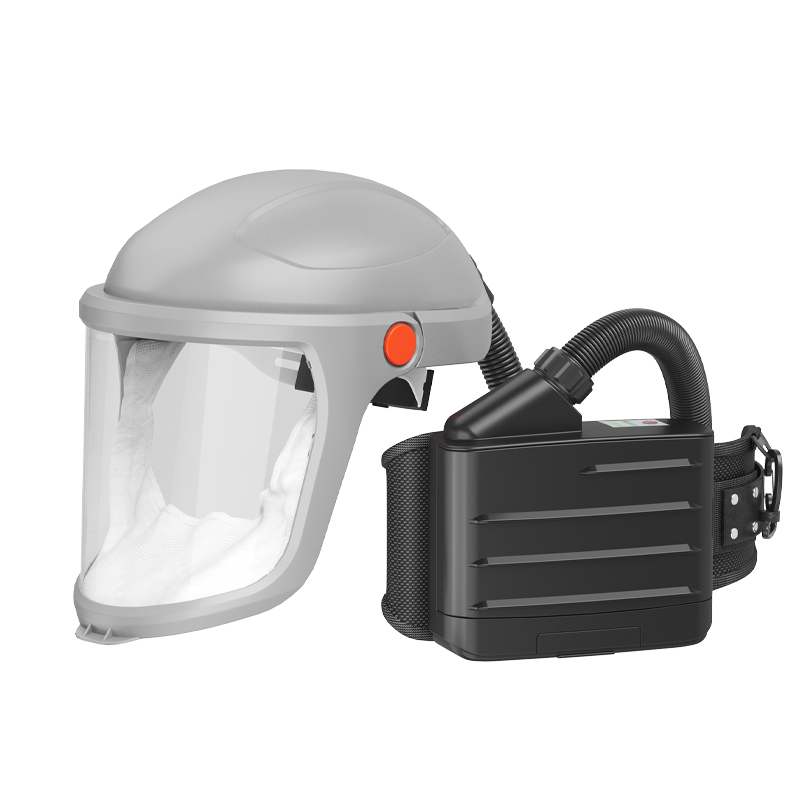
Respiradores purificadores de ar motorizados com capuz

Respiradores purificadores de ar motorizados com capuz

  • NIOSH PAPR: US Compliance & Testing Requirements
    NIOSH PAPR: US Compliance & Testing Requirements
    Jul 17, 2026
      In all industrial work environments across the United States, the compliance of Powered Air-Purifying Respirators (PAPRs) is strictly regulated under federal code 42 CFR Part 84. NIOSH certification serves as the only legally recognized qualification for respiratory protection devices and is fully enforced by OSHA. Unlike flexible regional protection standards, NIOSH approval is mandatory for all workplace applications, including general industry, construction, healthcare, and manufacturing.Only officially NIOSH-listed and approved PAPRs are permitted for on-site deployment. While most EHS managers and procurement professionals understand that PAPRs require NIOSH certification, many are unfamiliar with the full range of performance and durability tests required for official approval. This article provides a detailed breakdown of the complete NIOSH testing criteria that all qualified PAPRs must pass, helping safety professionals evaluate product quality, eliminate non-compliant equipment, and maintain standardized workplace safety.   Filter performance and filtration efficiency testing form the foundation of NIOSH’s PAPR grading system and represent the first critical stage of certification. Before formal testing, filter cartridges undergo standardized environmental preconditioning to simulate performance changes caused by long-term storage and humid working conditions. Two types of aerosol challenges are applied according to different hazard types: sodium chloride aerosol for solid dust environments and DOP oil aerosol for oil-based fume contaminants, which differentiates the application scope of N-series and P-series filters. Testing airflow rates are strictly defined based on papr system construction: 115 L/min for tight-fitting facepiece models and a minimum of 170 L/min for loose-fitting hood and helmet-style units. Throughout the full loading test, high-concentration particulate aerosol is continuously injected until the filter reaches saturation. Certified PAPRs must maintain stable filtration efficiency without excessive particulate penetration at any stage.   As motor-driven respiratory devices, PAPRs must pass NIOSH-specific airflow performance and battery durability tests. Under 42 CFR Part 84, PAPRs must sustain airflow above the minimum rated output even as filters become fully loaded and battery voltage gradually declines. Consistent positive pressure inside the facepiece or hood is essential to prevent external contaminant ingress. Professional breathing simulators are used to monitor inhalation and exhalation resistance throughout operation. Emergency power failure scenarios are also tested to ensure residual resistance does not hinder breathing during sudden motor shutdown. Additionally, PAPRs undergo extended continuous operation and extreme temperature cycling tests to verify battery and motor stability during full-shift, 8-hour work cycles, eliminating common field risks such as airflow dropouts, low-temperature shutdowns, and high-temperature battery failure. Total inward leakage and system tightness testing are core evaluations that determine real-world protective effectiveness. NIOSH enforces distinct testing protocols for the two mainstream PAPR designs. Tight-fitting facepiece PAPRs require quantitative fit testing with human test panels and corn oil aerosol to measure particle penetration through facial seals, headband connections, and assembly gaps. Loose-fitting hood and helmet papr respirator systems are exempt from facial fit testing but must comply with strict overall inward leakage limits. Critical inspection areas include neck seals, duct connections, and hood stitching joints. All units also undergo accelerated aging through repeated donning, doffing, and hose bending cycles to simulate long-term wear and seal degradation. Any leakage exceeding the standard threshold results in test failure.   Beyond core protection performance, NIOSH mandates a comprehensive set of structural durability, ergonomic, and functional tests to ensure long-term operational safety. Structural evaluations include drop resistance, repeated hose flexing, lens impact and abrasion resistance, and headband tensile strength, verifying component reliability under daily industrial wear. Ergonomic assessments are conducted with test subjects of different body types to ensure easy donning, unobstructed field of view, and comfortable long-duration wear. Additional functional tests cover operational noise levels and speech intelligibility to support effective on-site communication. For PAPRs equipped with gas cartridges, extra adsorption lifespan tests for organic vapors and acid gases are required to confirm certified service duration.   Overall, NIOSH establishes a rigorous, multi-dimensional testing framework under 42 CFR Part 84, covering filter efficiency, powered airflow stability, system tightness, structural durability, and ergonomic safety. These standardized requirements define the minimum safety benchmark for all respirators entering the U.S. market. For workplace safety and procurement teams, verifying PAPRs against these official NIOSH test criteria is essential to protecting workers from particulate and aerosol hazards, avoiding OSHA penalties for non-compliant PPE, and sustaining long-term regulatory compliance at industrial facilities.If you want know more, please click www.newairsafety.com.
    LEIA MAIS
  • AS/NZS 1716:2012: Compliance Standard for PAPR Respirators
    AS/NZS 1716:2012: Compliance Standard for PAPR Respirators
    Jul 13, 2026
      In the industrial safety system of Australia and New Zealand, the compliance of respiratory protection equipment is a core part of workplace risk prevention and control. As an official standard for respiratory protective devices jointly issued by the two regions, AS/NZS 1716:2012 serves as the statutory basis for the access, testing, and application of all respiratory protection equipment. Many practitioners are familiar with the P1, P2, and P3 classification of disposable filtering masks, yet often overlook the profound correlation between this standard and Powered Air-Purifying Respirators (PAPRs). Unlike conventional passive respirators, PAPRs adopt an electric air supply system to actively purify air and reduce breathing resistance, delivering higher protection levels and broader application scenarios. Undoubtedly, AS/NZS 1716:2012 is the authoritative specification that defines the product performance, testing criteria, and compliance thresholds of PAPRs, as well as the core guideline for the selection, acceptance, and maintenance of papr air purifier equipment in Australian and New Zealand workplaces.   It is essential to clarify the core definition: AS/NZS 1716:2012 is not limited to regulating simple protective masks, but covers all categories of respiratory protection equipment including PAPRs. This standard stipulates the manufacturing requirements, performance indicators, testing methods, and certification specifications for various respiratory protective devices, applicable to all workplace scenarios involving harmful dust, aerosols, and particulate contaminants. Compared with traditional negative-pressure respirators, PAPRs feature unique electric air supply structures, enclosed designs, and continuous air delivery functions. Accordingly, the standard sets independent special testing dimensions for PAPRs, covering critical indicators such as air supply stability, filtration efficiency, overall equipment tightness, battery durability, and structural safety. It establishes a testing system completely different from that of ordinary masks, fundamentally preventing non-compliant PAPR devices from being put into workplace use.   The filtration classification system constitutes the core content of AS/NZS 1716:2012 for regulating PAPR protection performance. Adopting the exclusive Australian and New Zealand three-tier particulate filtration classification of P1, P2, and P3, the standard precisely defines the filter element performance of PAPRs. The P1 grade is suitable for low-concentration dust scenarios with basic filtration efficiency requirements met. The P2 grade can filter over 94% of fine particles of 0.3 microns, covering most industrial dust, welding fume, and aerosol scenarios, making it the mainstream configuration for workplace PAPRs. As the highest protection grade, P3 features stringent requirements for filtration accuracy and sealing performance, tailored for high-pollution and high-risk operating environments. All compliant powered respirators devices must be marked with the corresponding classification on the body or packaging. Products with air supply functions but without classification certification under this standard are not recognized by the Australian and New Zealand workplace safety system.   Beyond filter element filtration performance, AS/NZS 1716:2012 also stringently regulates the overall safety and operational performance of PAPRs. For the exclusive electric air supply system of PAPRs, the standard mandates stable airflow delivery to avoid insufficient air supply or airflow interruption, while imposing strict requirements on equipment airtightness, leakage prevention, and material safety. In addition, the standard differentiates the application requirements for tight-fitting and loose-fitting PAPRs, specifying that tight-fitting models must undergo professional fit testing while loose-fitting models are exempted, providing clear specifications for on-site enterprise implementation. Furthermore, the standard covers routine inspection, fault judgment, and service life thresholds for PAPRs, forming a standardized basis for daily equipment operation and maintenance. In the Australian and New Zealand workplace compliance framework, AS/NZS 1716:2012 forms a complementary closed-loop system with AS/NZS 1715:2009 to regulate the full lifecycle management of PAPRs. AS/NZS 1716 focuses on product performance and compliance certification, answering the core question of whether the equipment is qualified. In contrast, AS/NZS 1715 governs the selection, application, training, maintenance, and scrapping processes of equipment, standardizing correct operational practices. Enterprises adopting PAPRs must meet the requirements of both standards: the equipment itself shall be certified per AS/NZS 1716:2012, and its usage and maintenance procedures shall comply with AS/NZS 1715. This dual-standard system ensures the high-level protective performance of PAPRs can be fully realized, effectively reducing occupational health risks caused by dust and particulate pollutants.   In summary, AS/NZS 1716:2012 is the fundamental compliance benchmark for PAPR application in Australia and New Zealand. It not only builds a dedicated performance testing and classification system for PAPRs, distinguishing high-level powered air protection from ordinary negative-pressure protection, but also clarifies the access criteria and safety thresholds for workplace PAPR deployment. For industrial enterprises, safety practitioners, and equipment suppliers, a thorough understanding of the PAPR-specific specifications in this standard helps protect workers’ occupational health, eliminate potential safety hazards, ensure compliant equipment selection, and pass workplace safety inspections smoothly. It is an essential core criterion for standardized respiratory protection management across Australia and New Zealand.If you want know more, please click www.newairsafety.com.
    LEIA MAIS

  • NEW AIR PAPR with Multi-Functional Flip-Up Welding Helmet
    NEW AIR PAPR with Multi-Functional Flip-Up Welding Helmet
    Jun 18, 2026
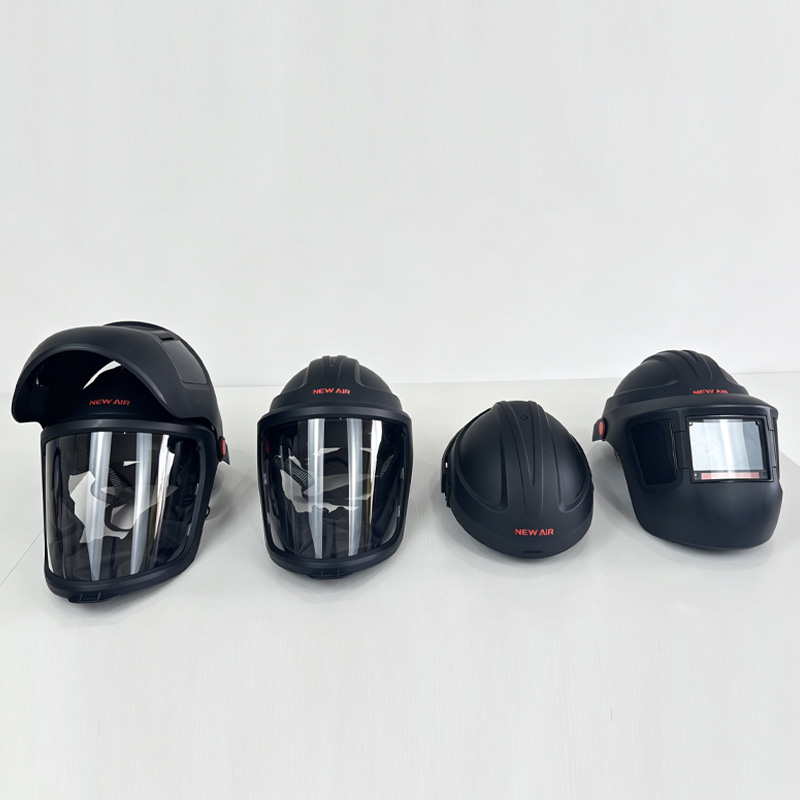
    For welders, grinders and construction workers, constantly switching between different safety gears wastes working hours, takes up storage space and brings hidden safety risks. Boasting an innovative modular structure, the NEW AIR flip-up welding safety helmet delivers genuine 4-in-1 performance. It can be quickly converted into four independent protection modes with just one unit, removing the need to purchase separate safety hard hats and welding masks. Whether you conduct metal grinding, arc welding, daily site operations, or work in dusty environments requiring powered air ventilation, this multi-functional helmet switches modes in seconds to match all kinds of working demands. The first basic mode: Integrated flip-up welding & grinding helmet. No disassembly is required, as it combines welding and grinding functions in one piece. After finishing welding work, simply flip up the welding cover to instantly switch to the clear grinding visor mode. You won’t need to take off the helmet repeatedly when alternating between welding and grinding tasks.   The second mode: Safety hard hat with panoramic clear protective visor. Remove the welding cover, and you will get full-face protection with an ultra-wide viewing area that blocks flying metal chips, grinding sparks, chemical splashes and dust. This mode is specially tailored for grinding, cutting, polishing and pre-processing procedures. Thanks to the flip-up structure, you can lift the entire clear visor with ease, allowing you to communicate with co-workers and inspect workpieces without removing the helmet, which greatly improves work efficiency during repetitive grinding operations.   The third basic mode: Standalone industrial safety hard hat. Take off the face visor, and the sturdy impact-resistant shell can be used alone as a standard construction hard hat. Certified to EN397 standards, it fully meets workplace safety codes for fall and impact resistance. It fits perfectly for daily site inspections, material handling, light assembly and other jobs that do not require full-face coverage. The thickened reinforced shell defends against falling debris, while the adjustable internal head harness delivers comfortable all-day wear for outdoor and workshop shift work. The fourth mode: Professional welding safety helmet. Remove the clear visor and install the welding cover, and the whole unit transforms into a dedicated welding mask. Its dual-window design features a large auto-darkening lens plus an auxiliary side viewing window, which greatly broadens the field of vision for TIG, MIG and stick welding. Traditional welding masks offer no head impact protection, but this all-in-one helmet retains the shock-resistant hard hat shell to protect your head from falling workpieces during welding. It also features a lighter overall weight for less fatigue.   What makes the NEW AIR helmet stand out above other multi-functional protective gears is its full compatibility with self-developed PAPR (Powered Air-Purifying Respirator). The helmet fitted with a clear visor can be directly matched with our proprietary air papr unit. During grinding, polishing and metal-dust-intensive work, the ventilation system continuously delivers filtered clean air into the helmet to prevent inhalation of harmful particles. The full welding configuration is also compatible with the matching blower: constant fresh airflow isolates toxic welding fumes, stops fogging on both the clear visor and auto-darkening lens, and eliminates the stuffy, suffocating discomfort that plagues users of enclosed welding masks after long hours of wear.   From basic construction site work and heavy-duty grinding to professional welding and high-fume high-risk industrial tasks, the NEW AIR flip-up welding safety helmet integrates four separate protective devices into a single unit. It delivers higher cost performance, saves storage space, and eliminates the trouble of frequently swapping safety equipment between different working procedures. When paired with the PAPR powered air supply system, it provides comprehensive protection for the head, face and respiratory tract all at once, making it the ideal all-in-one safety solution for welders and manufacturing industry practitioners.If you want know more, please click www.newairsafety.com.
    LEIA MAIS
  • Por que os marceneiros precisam de um respirador PAPR?
    Por que os marceneiros precisam de um respirador PAPR?
    Dec 15, 2025
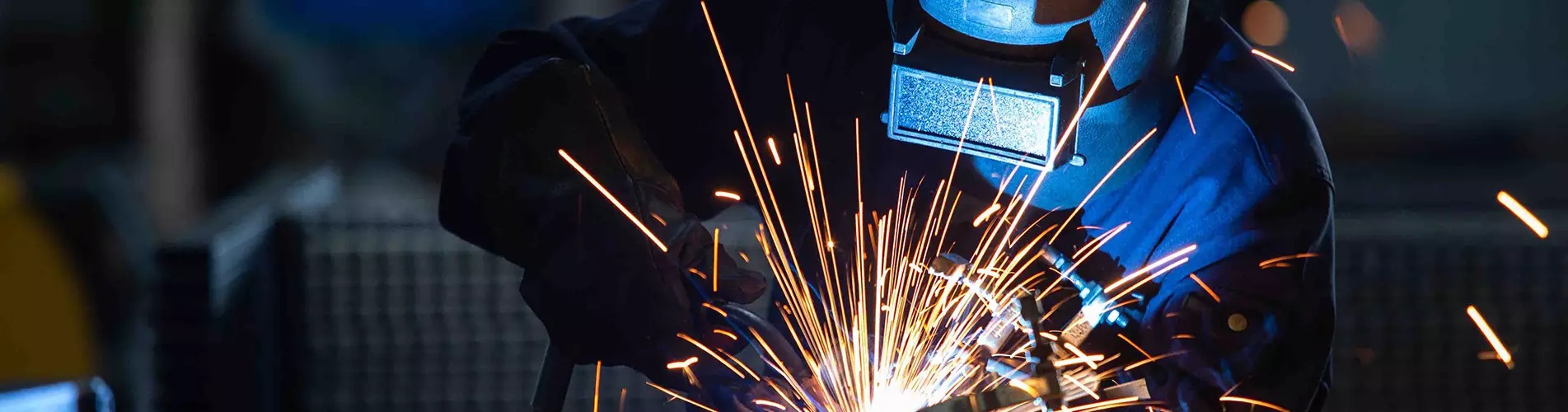
     Quando se pensa em marcenaria, imagens de lascas de madeira voando e o aroma intenso da madeira costumam vir à mente. No entanto, poucos se atentam aos "assassinos invisíveis à saúde" — a poeira de madeira. Muitos artesãos estão acostumados a usar máscaras comuns enquanto trabalham, pensando: "Contanto que as partículas maiores sejam bloqueadas, está tudo bem". Mas com a crescente conscientização sobre saúde ocupacional, cada vez mais profissionais estão recorrendo a... sistema paprHoje, vamos explorar por que o trabalho em madeira, um ofício aparentemente "simples", exige equipamentos de proteção de "nível profissional". Primeiramente, é crucial entender: os riscos da poeira de madeira são muito maiores do que você imagina. O processamento da madeira gera não apenas lascas visíveis, mas também uma grande quantidade de partículas inaláveis ​​(PM2,5). Essas minúsculas partículas podem penetrar profundamente no trato respiratório e o acúmulo a longo prazo pode levar a doenças ocupacionais como pneumoconiose e bronquite. O que é ainda mais preocupante é que a poeira de algumas madeiras nobres (como jacarandá e carvalho) contém componentes alergênicos, que podem causar coceira na pele e crises de asma ao contato. As máscaras comuns têm eficiência de filtragem insuficiente ou vedação inadequada — a poeira pode facilmente passar pelas frestas ao redor do nariz e do queixo, reduzindo consideravelmente sua eficácia protetora. A principal vantagem de uma máscara de proteção é a sua capacidade de filtrar a poeira de forma eficaz. respirador purificador de ar positivo O diferencial está na sua "proteção ativa + filtragem de alta eficiência": ela aspira o ar ativamente através de um ventilador embutido, filtra-o com um filtro HEPA e, em seguida, fornece o ar limpo para a máscara, bloqueando a entrada de poeira na fonte. A complexidade das tarefas de marcenaria destaca ainda mais a insubstituibilidade dos respiradores purificadores de ar motorizados (PAPR). Os marceneiros realizam uma variedade de tarefas, desde serrar e aplainar até lixar e dar acabamento. Cada processo produz poluentes diferentes: serrar madeira dura gera muitas lascas afiadas, lixar cria poeira ultrafina e o acabamento pode ser acompanhado por compostos orgânicos voláteis (COVs). As máscaras comuns geralmente são ineficazes contra essa "poluição composta", mas os PAPR podem ser equipados com diferentes filtros de acordo com os diferentes processos — eles não apenas filtram a poeira, mas também oferecem proteção contra poluentes gasosos como os COVs. Mais importante ainda, as operações de marcenaria geralmente exigem que o profissional se incline e gire com frequência, o que pode deslocar facilmente as máscaras comuns. As máscaras PAPR, no entanto, são projetadas para se ajustarem perfeitamente ao rosto e são fixadas com faixas de cabeça ou capacetes de segurança. Mesmo ao se inclinar para lixar uma mesa ou inclinar a cabeça para cortar madeira por longos períodos, elas mantêm uma boa vedação. O conforto durante longas horas de trabalho é um dos principais motivos pelos quais os respiradores com purificação de ar motorizada (PAPR) estão ganhando popularidade entre os marceneiros. É comum que esses profissionais trabalhem mais de 8 horas por dia. Máscaras comuns, especialmente as de alta proteção como as N95, têm baixa respirabilidade. Usá-las por muito tempo pode causar aperto no peito, falta de ar e deixar marcas no rosto. Os PAPR, por outro lado, mantêm uma leve pressão positiva dentro da máscara por meio de um suprimento contínuo de ar ativo, facilitando a respiração e reduzindo efetivamente a sensação de abafamento. Alguns podem pensar respiradores motorizados As máscaras PAPR são mais caras do que as máscaras comuns e oferecem uma relação custo-benefício ruim. Mas, considerando os custos com saúde a longo prazo, esse investimento definitivamente vale a pena. Os custos de tratamento para doenças ocupacionais como a pneumoconiose são altos e, uma vez contraídas, são difíceis de curar, afetando seriamente a qualidade de vida e a capacidade de trabalho. Um respirador PAPR confiável pode ser usado por muito tempo, desde que o filtro seja trocado regularmente. Ele não só protege sua saúde, como também evita a perda de dias de trabalho por motivo de doença. Para estúdios de marcenaria profissional, fornecer respiradores PAPR aos funcionários também é uma demonstração de responsabilidade corporativa, que pode fortalecer a coesão da equipe e a segurança no trabalho. Trabalhar com madeira é um ofício que exige paciência e engenhosidade. Proteger sua saúde é essencial para melhor dominar essa arte. Máscaras comuns podem ser suficientes para ambientes com pouca poeira e de curta duração, mas para operações complexas de marcenaria de longa duração, a alta eficiência de proteção, o conforto e a segurança para a saúde proporcionados pelos respiradores com purificação de ar motorizada (PAPR) são insubstituíveis por equipamentos de proteção comuns. Não deixe que o "estar acostumado" ou o "não tem problema" se tornem ameaças ocultas à sua saúde. Adicione um PAPR à sua bancada de trabalho e torne cada sessão de aplainamento e lixamento mais tranquila. Para saber mais, clique aqui. www.newairsafety.com.
    LEIA MAIS
  • Proteção Respiratória para Soldagem: Respiradores com Purificador de Água Motorizado (PAPR) em 4 Métodos de Soldagem
    Proteção Respiratória para Soldagem: Respiradores com Purificador de Água Motorizado (PAPR) em 4 Métodos de Soldagem
    Oct 25, 2025
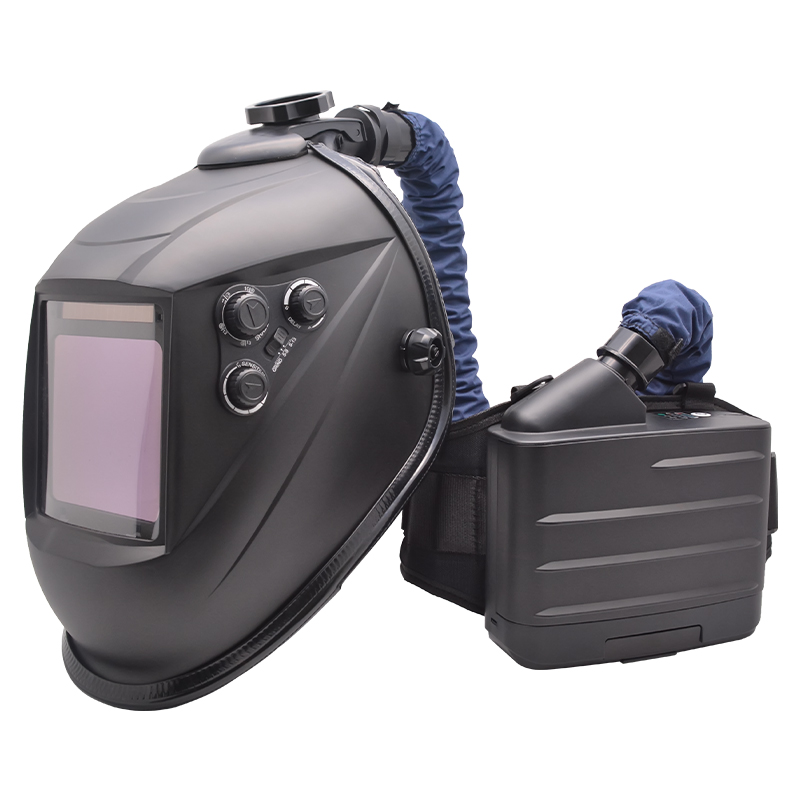
    Na soldagem, fumos e gases tóxicos ameaçam a saúde respiratória dos trabalhadores. Como um dispositivo de proteção eficiente, Sistema de respiração com ar motorizado Atuar como uma "barreira respiratória" para diversos cenários de soldagem. Entender como o PAPR se adapta a diferentes métodos de soldagem é fundamental para a segurança. A soldagem a arco com eletrodo revestido (SMAW) produz grandes quantidades de fumos metálicos (por exemplo, óxido de ferro, dióxido de manganês) que causam pneumoconiose. As máscaras tradicionais têm eficácia limitada e alta resistência à respiração. Respirador motorizado usa um ventilador integrado para fornecer ar filtrado, resolvendo problemas de resistência e bloqueando mais de 95% dos vapores finos com cartuchos de filtro de alta eficiência. A soldagem e o corte por arco de plasma geram vapor metálico e ozônio em alta concentração devido às temperaturas extremas. O respirador com purificação de ar (PAPR) oferece "dupla proteção" com filtros específicos para ozônio e filtros de alta eficiência. Seu visor facial de amplo campo de visão também atende às necessidades de precisão das operações com plasma sem comprometer a eficiência. A goivagem a arco de carbono libera poeira de carbono, vapores de óxido de ferro e gases tóxicos (CO, óxidos de nitrogênio). A PAPR utiliza filtros compostos para combater vapores e gases, enquanto sua viseira facial selada impede o vazamento de poluentes, proporcionando proteção abrangente. A soldagem e o corte oxiacetilênicos dependem de gases combustíveis, produzindo gases tóxicos (CO, acetileno) que se acumulam em áreas mal ventiladas. Respirador com suprimento de ar motorizado é equipado com recipientes de vapor orgânico para absorver gases nocivos, e seu sistema de pressão positiva bloqueia poluentes externos, mesmo em espaços fechados. Da soldagem por arco submerso (SMAW) ao corte por oxicorte, o PAPR adapta-se a diversas características de poluentes por meio de filtragem flexível, fornecimento de ar ativo e proteção selada. A escolha do PAPR correto protege a saúde dos trabalhadores e aumenta a segurança operacional. Para saber mais, entre em contato conosco. www.newairsafety.com.
    LEIA MAIS

Deixe um recado

Deixe um recado
Se você estiver interessado em nossos produtos e quiser saber mais detalhes, deixe uma mensagem aqui e responderemos o mais breve possível.
Enviar
CONTATE-NOS: sales@txhyfh.com

Lar

Produtos

Whatsapp

Contate-nos